Time to Read:

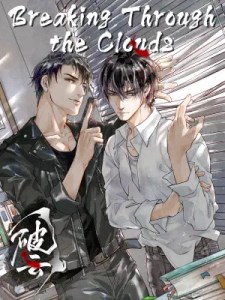
A carp in a bowl had gained consciousness as it lives with Jinglin, a recovering man who mostly slept. It had gotten into its head that it wanted to devour its caretaker. And when Cangji gained a human body as a result of nearly becoming fish feed himself, that’s the pledge he made… But it would have to wait because their lives were further flipped upside down when Cicada Haven was disturbed and Jinglin had to leave to get his bell back.
“Have you ever wondered…” Jinglin turned his head, cheek brushing against Cangji’s fingertips, yet his eyes remained aloof. “…who will ultimately end up devoured—you or me?”
“Doesn’t matter if it’s me.” A spirit’s cunning flashed across Cangji’s eyes. “As long as I end up with you.”
Thoughts
Right off the bat, I’m going to tell you Nan Chan is one of my favourite novels. It’s no secret that Golden Terrace has my heart captured completely and it’s my “cosy” comfort read, but Nan Chan is definitely not far behind that number one spot that Golden Terrace holds.
This story has quite a Buddhist theme to it with a base premise of the eight sufferings. Chinese Buddhism is also influenced by Taoism and Confucianism so there are parts that might not resonate as Buddhism to some as other parts. And, although there are eight sufferings in this story, the number of sufferings can vary depending on the source, and they aren’t exclusive to Buddhism either. Additionally, we see Chinese mythology and folklore with various types of spirits making appearances, immortals are mentioned, and deities are named. There are also cultivation aspects and if you’re unfamiliar with Chinese fantasy that might throw you off a little bit, but probably not as much as… just about everything else I just mentioned. That’s especially true if you’re, well, as not Chinese as I am.
I find that Tang Jiu Qing writes relationship development between characters really well, and when I get around to reviewing another translated work by Tang Jiu Qing, Qiang Jin Jiu, also known as Ballad of Sword and Wine, I’m likely to mention this again. You can feel the dynamic between Jinglin and Cangji change and progress in a way that doesn’t feel forced while it doesn’t overpower the other plot elements, and, instead, the development is very integrated into other plot elements. The plot pushes them forward in their relationship but the plot is also pushed by the change in their dynamics.
I also like the way Tang Jiu Qing uses flashbacks in Nan Chan. It allows the reader to get a glimpse of something from before the story and we do get a little bit of that in Volume 1. Personally, I like the way perspective has been used in this novel and I find that weather also sets the mood very well.
A problem in, for instance, Peach Blossom Debt by Da Feng Gua Guo, which I reviewed recently, was that side characters were expendable and lacked depth and sometimes value. They could be tossed aside as soon as they had achieved their purpose. This is not an issue one can expect with Nan Chan, as side characters actually do matter, even when they have small roles. They hold a lot of depth and are incredibly valuable for the story and its progression.
The translation (also by XiA, who translated Peach Blossom Debt) seems pretty good, but I can’t be the only one who reacted to the fact Jinglin and Cangji and other names have been written as a single name, although a lot of resources will write them separately. I don’t have a particular answer to why this choice was made, obviously, as I’m not the translator or the publisher, however, I do see a benefit in doing this. There is no common family name between Jinglin and his siblings, for instance, so an occidental mind will be more likely to read this as just given names. However, Jinglin also looks like such a funny name in context and combined with the copper bell and it’s even more clear when the word jingling has accidentally passed editing capitalised. It doesn’t take away that I think Jinglin is a really cute (???) character. Cangji is also pretty sweet (???) and I love them together.
I definitely would say this is one of my recommended reads. However, much like my other favourite books, it’s not particularly light in tone. It can be funny but also very grim, which makes sense considering the theme of the eight sufferings in Buddhism. But, still, to reiterate, some of the plot points really are very grim.
It can also be a bit difficult to follow if you don’t understand any of the symbolism in there, but I think it can still be an interesting read even if you don’t. I didn’t understand everything the first readthrough, and yet it did resonate with me because of the characters and the things they went through.
So if you do like deeper, not-as-easy-to-digest fantasy fiction with well-written characters and relationship developments and complex side characters and backstories, this is a series you ought to get.


 The Anny Blog